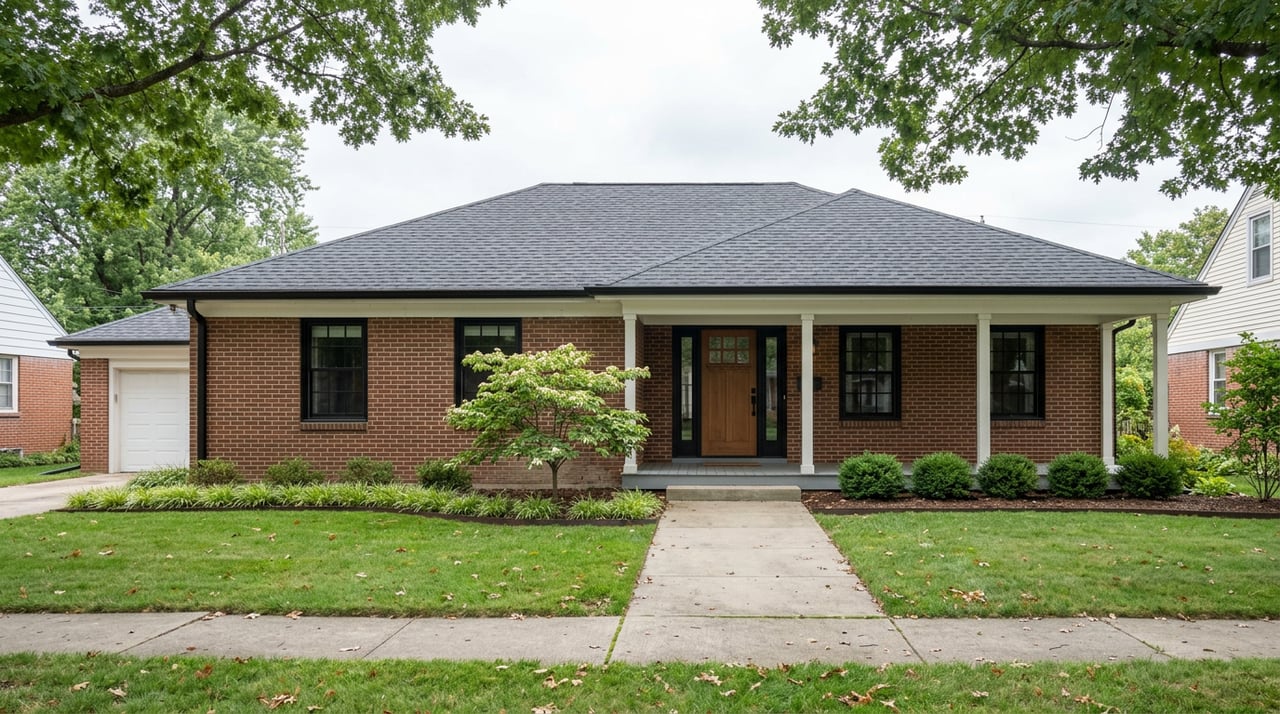
Hamilton's Median Home Price Just Dropped. Don't Read That as a Discount.
September 17, 2026
September 17, 2026
If you pulled up Hamilton's numbers this summer, you probably saw a headline that didn't add up. The median sale price is down. Homes are moving faster. More of them are selling. And the average price is climbing. How does a market get cheaper and hotter in the same three months?
It doesn't, not really. What's happening in Hamilton right now is a mix shift, not a slowdown, and if you're comparing this city to a neighboring Butler County suburb using nothing but the median you saw on a portal, you're working with a number that's actively hiding the thing you need to know.
Over the three months ending July 2026, Hamilton's median sale price came in at $220,000, down 0.95% from the same stretch last year. That sounds like softening. But in that same window, the average house price was $237,000, up 4.4% year over year. Homes sold in 38 days on average, down from 42 the year before. And 201 homes closed in July 2026, up from 189 the prior July.
A falling median with a rising average, faster sales, and more of them isn't what a cooling market looks like. It's what a market looks like when the composition of what's selling changes underneath a flat or slightly softening base.
Other trackers make the point differently. One market-watch service, pulling from closings tracked through early September 2026, put Hamilton's trailing six-month median at $204,000 across 497 sales, with the middle half of those closings landing between $145,000 and $255,000. A separate aggregator pegged the median closer to $235,000, with condos averaging around $155,000 against single-family homes near $235,000, and reported a third of homes selling above asking last month. None of these numbers are wrong. They're measuring the same market through different windows, and the fact that they disagree by tens of thousands of dollars is itself the tell. Hamilton isn't one market this year. It's at least two, and the median is the average of both, which means it represents neither.
A median tells you the price of the home in the exact middle of the pack. It says nothing about whether that pack is bunched close together or spread wide, and it says nothing about which end of the spread is doing the moving. As one of the trackers above put it plainly, a median hides the shape of a market, and that spread matters more than the headline number.
Here's the mechanism. If a wave of buyers starts paying a premium for a specific pocket of renovated or infill housing while the rest of the city's older stock keeps trading at roughly the same price it always has, the average climbs because it's pulled up by the premium sales. The median can stay flat or even dip slightly, because the typical transaction, the one in the middle, is still an ordinary older home that hasn't been touched. Add rising volume and shrinking days on market, and you get a picture of buyers moving fast, but selectively.
The question worth asking isn't whether Hamilton got cheaper. It's where the premium is landing, and why.
The answer sits on North B Street, inside a former paper mill that sat empty for years before redevelopment began in 2018.
Spooky Nook Sports Champion Mill is a $165 million adaptive reuse of the old Champion Paper Mill, now standing as the largest indoor sports facility in the United States at nearly one million square feet. It's not a small local gym. City leaders have projected a combined 3 million visitors across 2025 and 2026, and Hamilton City Manager Craig Bucheit told council the total economic impact could reach $75 million.
If even half of a single weekend's crowd comes from out of town and spends as little as $50 each, Bucheit said, "that's $1.7 million in economic impact" from one tournament alone.
That's the kind of number that shows up first in restaurant receipts and hotel occupancy, then later in what people are willing to pay to live within walking distance of it. Countywide hotel revenue has nearly doubled since 2015, and the facility is currently expanding its own lodging, with a four-story addition planned to bring its Warehouse Hotel to 159 rooms, targeted to open in the fourth quarter of 2026 under a national hotel brand still being finalized. Hamilton City Manager Joshua Smith has said plainly, "Spooky Nook has certainly moved that along a little bit faster," describing an upward trend in restaurants and retail that was already underway before the mill reopened.
You can see it in who's opened nearby. Fretboard Brewing put its second location in downtown Hamilton in 2019. Cafeo Hospitality Group opened Billy Yanks in 2020 inside a 19th-century Main Street building that had sat vacant, and the same group is reportedly planning two more concepts in Hamilton. That's not scattered activity. That's dollars concentrating in a corridor.
The mill's own developer has been explicit about why this location worked. Part of the site's appeal is its proximity to German Village, a nine-block historic residential district just southwest of the Champion Mill complex, across the Great Miami River from the development itself.
That's the corridor where the mix shift is happening. Buyers paying attention to what's arriving on North B Street, and to a historic residential pocket within walking distance of it, are competing for a specific kind of home: older, often brick, frequently renovated or ready for it, inside a district with its own preservation character. Those are the sales pulling the average up. They're not the majority of transactions, which is why the citywide median hasn't moved much, but they're enough to bend the average and shorten the average time on market for the properties that fit the profile.
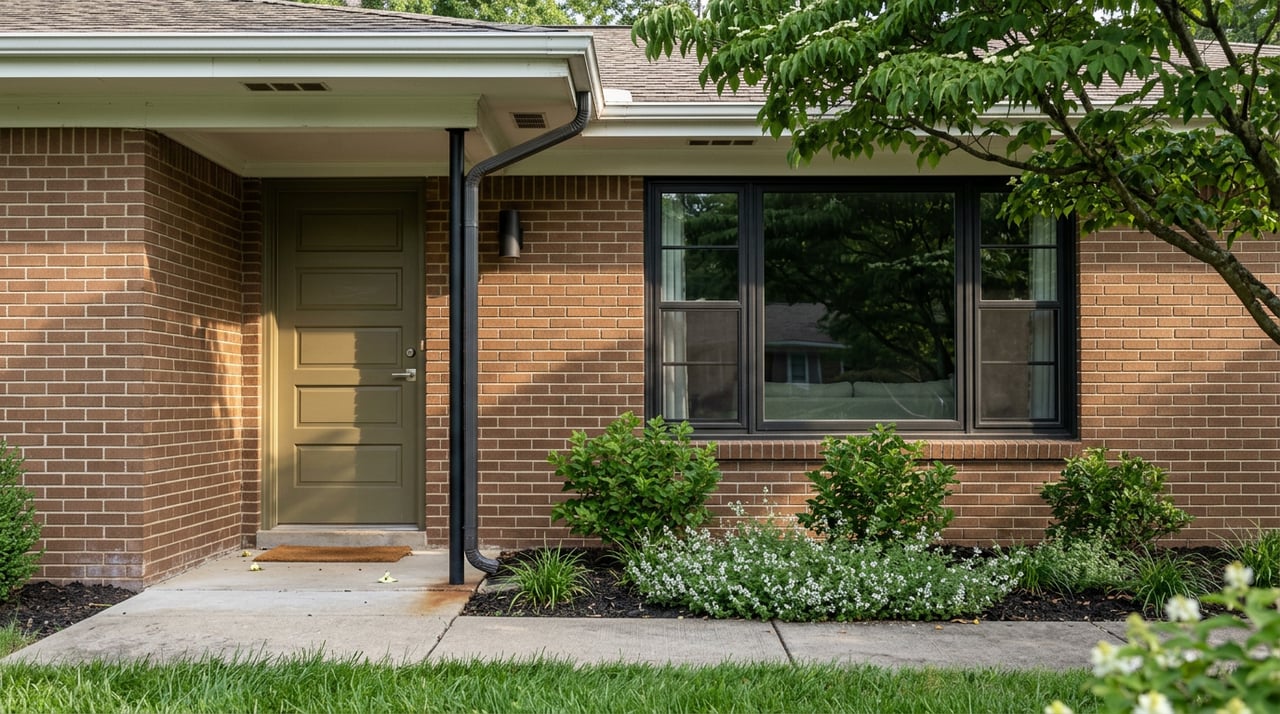
If you're a homeowner weighing Hamilton against a place like West Chester or Mason, the citywide median is only useful as a floor, not a forecast. Two houses listed a mile apart in Hamilton right now can be sitting in genuinely different markets. One is competing against a wave of buyer interest tied to a nine-figure redevelopment and a historic district with real momentum behind it. The other is priced against decades of an ordinary, steady, unglamorous Hamilton housing stock that hasn't changed much and isn't trying to.
Neither is the wrong home to buy. But the number that matters for your specific decision isn't the citywide median at all. It's where a specific listing sits relative to the corridor, and whether the seller's asking price already reflects that proximity or is still catching up to it.
| Source (period reported) | Reported median | What it captures |
|---|---|---|
| Trailing 3 months ending July 2026 | $220,000 | Recent closed sales, most current window |
| Trailing 6 months through early Sept 2026 | $204,000 | Broader closing sample, wider historical pull |
| Aggregated MLS-based figure (Aug 2026) | $235,189 | Blends single-family and condo product |
The spread between these numbers is the story. A $30,000 gap in reported medians in the same city, in the same year, is exactly what you'd expect when a market is stratifying rather than moving as one.
Is Hamilton actually a buyer's market or a seller's market right now? Both, depending on the property. Homes tied to the Champion Mill and German Village corridor are moving in fewer days with more competition. Homes further from that pull are trading more like they always have, without the same urgency.
Should I wait for prices to drop before buying in Hamilton? The citywide median dipping slightly doesn't mean discounts are showing up across the board. It means the typical transaction hasn't changed much while a specific segment has gotten more competitive. Waiting on a citywide number to fall further may mean missing the window on the segment that's actually appreciating.
Does this affect sellers outside the downtown corridor? It can work in your favor if buyers priced out of the German Village area start looking at comparable older housing stock elsewhere in the city. Pricing still needs to reflect your specific street and condition, not the headline number either direction.
Numbers like these are exactly why a citywide median is a starting point and not a strategy. If you're weighing Hamilton against another Butler County suburb, or you already have a specific street in mind and want to know what it's actually worth right now, Regina Miller has been walking Southwest Ohio buyers and sellers through this kind of market for years. Let's Connect and figure out what your money actually buys on your side of town.
Stay up to date on the latest real estate trends.
Put your real estate goals first with a dedicated neighborhood specialist focused on delivering peace of mind and exceptional results.