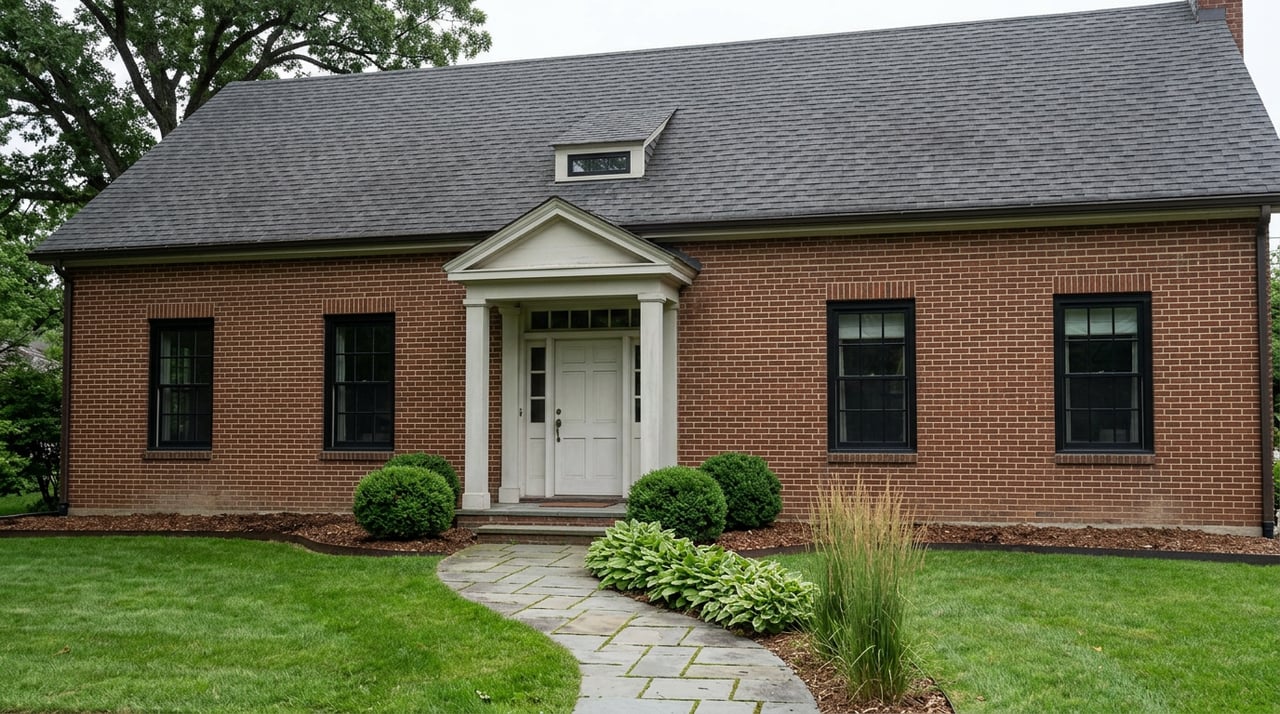
In Hamilton's Historic Districts, Your Renovation Has a Silent Partner
September 3, 2026
September 3, 2026
If you fall for a Queen Anne on Dayton Street or a red-brick two-story in German Village, the house is not the only party with a say in what happens next. Any exterior change to a home in one of Hamilton's three nationally registered historic districts has to clear the city's Architectural Design Review Board before a contractor touches it, and that board meets exactly twice a month. Most buyers learn this after they've already written an offer, usually while pricing out the new porch railing or the vinyl siding they assumed would be a weekend job.
That's the piece of this market that doesn't show up in the listing description. The house might be move-in ready. The exterior work you're already picturing might not be.
Hamilton's historic housing stock isn't scattered evenly across the city. It's concentrated in a handful of named districts, each with its own story and its own inventory of protected features.
Dayton Lane is the one most people picture when they think "historic Hamilton." The district holds 210 structures built mostly between the 1870s and the turn of the twentieth century, when the city's industrial barons competed to out-build each other along Dayton Street. Two of the standout survivors are the Benninghofen House, built for wool-mill partner Christian Benninghofen in the Queen Anne style, and the McKee House, built in 1870 for town postmaster John McKee and later given a turret by architect Samuel Hannaford. Residents still fund the upkeep of Campbell Avenue Park through neighborhood events like the Annual May Promenade and Ghost Walk.
German Village sits just north of downtown, a nine-block district listed on the National Register of Historic Places since 1991. It was the first residential development built outside old Fort Hamilton, and its narrow lots and red-brick rowhouses run through a mix of Queen Anne, Italianate, Eastlake, and Gothic Revival styles. It's also the closest of the three districts to newer draws like Spooky Nook Sports at the Champion Mill complex, the Fitton Center for Creative Arts, and the RiversEdge Amphitheater, which is part of why interest in the neighborhood has picked up alongside downtown's broader momentum.
The third piece of Hamilton's historic footprint sits along the riverfront near downtown, closer to the blocks north of the Central Business District. Together, these three districts are why the city carries Certified Local Government status with the State of Ohio, which is also why a state historic inventory review layers on top of the local one for individually listed properties outside the district boundaries.
Here's the mechanism that catches people off guard. If your property sits inside one of these districts, or it's individually listed on the Ohio Historic Inventory, any exterior change requires a Certificate of Appropriateness from the Architectural Design Review Board before work begins. Not after you've already ordered materials. Before.
The list of what counts as "exterior" is broader than most buyers expect. Windows and window hoods. Siding, including whether vinyl is even an option. Gutters, box gutters specifically. Porches, including enclosing or removing one. Sheds and other accessory structures over 200 square feet. Paint colors on some properties. Even mural art, which the board reviews for its visual fit with the surrounding streetscape rather than approving or denying based on content.
The board meets the first and third Tuesday of every month at 4 p.m. in City Council Chambers at 345 High Street. That cadence is manageable if you plan around it. It's a problem if you don't.
Here's the quiet part: the review only covers what a person can see from a public street or sidewalk. A kitchen gut job, a new HVAC system, updated wiring behind the walls, none of that triggers the board. It's specifically the visible skin of the house, the porch, the roofline, the windows, the siding, that gets the extra layer of approval. That's precisely the category of repair most buyers plan to tackle first, because it's the most obvious and the most photographed.
Say you close in early September and your renovation punch list starts with a new roof and replacement windows before winter. In a non-historic-district home elsewhere in Hamilton, that's a standard building permit and you're scheduling contractors within days. In Dayton Lane or German Village, you need a Certificate of Appropriateness first, and the board only convenes twice a month. Miss the cutoff for submitting your application ahead of the next meeting and you're waiting two weeks minimum, longer if the board asks for revisions before approving.
That gap matters most for buyers who assumed they'd start exterior repairs the week after closing. It also matters for anyone budgeting a home equity loan or renovation escrow around a fixed number of contractor weeks. The Certificate of Appropriateness step doesn't cost money by itself, but the waiting period around it has a real dollar value if you're paying for temporary housing, storage, or a contractor crew that's booked elsewhere while you wait on approval.
Ohio's Residential Property Disclosure Form has required sellers to flag whether a property sits in a historic district since a 2004 update to the form. It's a small line item among dozens of others, easy to skim past between questions about the water heater and the roof's age. If you're touring anything in Dayton Lane, German Village, or the riverfront district, that box should already be checked. Read it as the first signal that your renovation plan needs a second conversation, not just with a contractor, but with the ADRB secretary at the city's Planning Department, before you finalize your offer's repair contingencies.
Sellers who've already navigated a Certificate of Appropriateness for their own past renovations are often a useful resource here. If the listing mentions recent exterior work, new windows, a rebuilt porch, replaced siding, that's often a home where the paperwork trail already exists and can save you a repeat application for the same feature.
Confirm the district before you fall in love with the house. The city's zoning map includes a layer that flags whether a property requires historic board approval. It takes five minutes and saves a guessing game later.
Talk to the ADRB secretary before you write repair contingencies into your offer. If a home inspection turns up a failing roof or rotting porch columns, you want to know upfront whether that repair needs board sign-off, because it changes both the timeline and the acceptable materials list.
Walk the district during one of its public moments. Dayton Lane's May Promenade and Ghost Walk are two obvious windows into what kind of exterior work has already cleared review, since you're literally looking at approved outcomes on porches and facades throughout the neighborhood.
Build your renovation calendar around the twice-monthly meeting schedule, not around your own moving timeline. If your closing lands right after a meeting date, plan for the wait until the next one.
Does painting my house require ADRB approval? On some properties within the districts, yes, particularly if the color scheme is part of what's documented for that structure's historic character. Check with the Planning Department before you buy paint.
What if the previous owner did exterior work without approval? That's a conversation for your inspection period. Unapproved past work can complicate future applications and, in some cases, require correction before the board will approve anything new on the same structure.
Is every older home in Hamilton inside a historic district? No. Hamilton has a wide mix of housing stock outside these three districts, including plenty of older homes with none of this review layer attached. The rules only apply within the mapped district boundaries or to individually listed properties on the state inventory.
Buying in Dayton Lane or German Village isn't a reason to walk away from a house you love. It's a reason to build your budget and your timeline around a step most buyers don't discover until they're already past the point of easily backing out. If you're weighing a historic Hamilton property against something newer in a neighboring Butler or Warren County community, or you just want a second set of eyes on what a listing's disclosure form is actually telling you, Regina Miller has walked enough of these deals to know where the paperwork slows down and where it doesn't. Let's Connect before you write the offer, not after.
Stay up to date on the latest real estate trends.
Put your real estate goals first with a dedicated neighborhood specialist focused on delivering peace of mind and exceptional results.